
Book review of Natural History of Silence by Jérôme Sueur, Polity (2024)
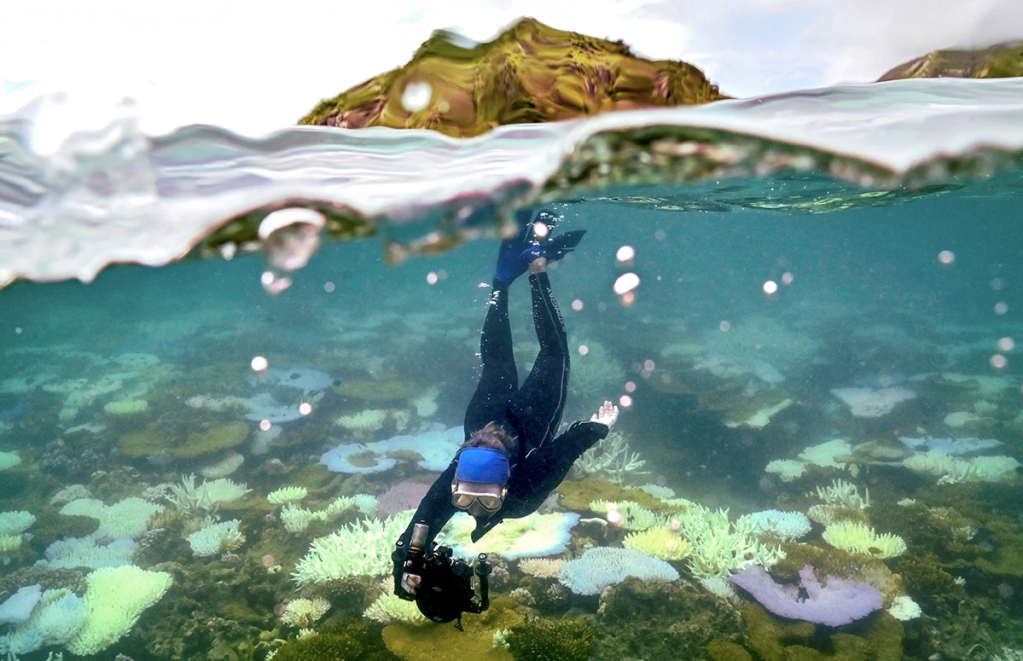
Featured image: A diver checks the health of corals on the Great Barrier Reef, Australia. Credit: David Gray/AFP via Getty
“Shhh!” This is the demand that eco-acoustics researcher Jérôme Sueur makes of humanity in his book, Natural History of Silence. The racket of technology — emanating from ships, aeroplanes, machinery and more — permeates even the remotest corners of the planet.
Sueur explores the impact of this ever-present hum on the animal world in Natural History of Silence. He offers rich descriptions of the sonic lives of several species, such as the rhythmic mating chirps of cicadas and the crackling and popping sounds produced in coral reefs. When human-made noise drowns out nature’s symphony, ecosystems become disrupted, Sueur argues. For instance, experiments around Moorea Island, French Polynesia, show that motorboat noise upsets free-swimming juvenile corals, which rely on reef sounds to find a suitable place to settle. In quieter, protected areas, coral attraction to reefs is much higher (D. Lecchini et al. Sci. Rep. 8, 9283; 2018).
 ALIX SOLIMAN