
Spring 2016
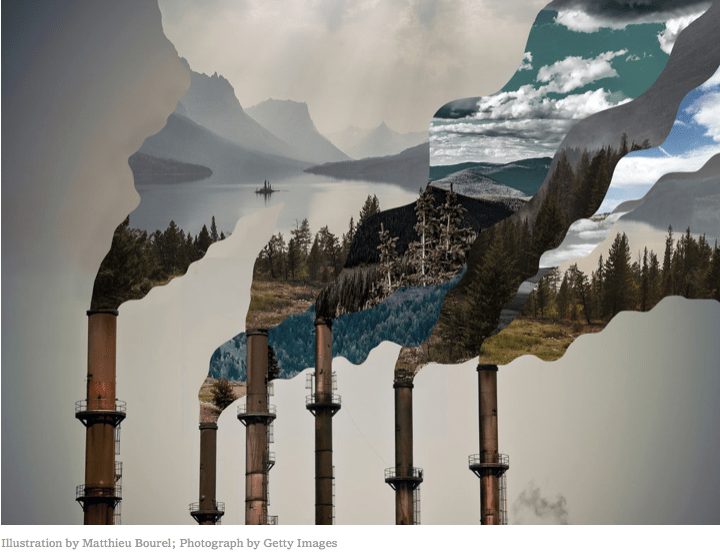
In ENVS 160, I engaged with a breadth of key themes in environmental studies and learned how to read into issues by integrating concepts and analytical skills from the natural sciences, social sciences, and humanities. I was introduced to the roles that the market, individual risk and hazard evaluation and institutional injustice play in environmental problems.
Throughout the semester I wrote synthesis posts on the assigned readings.
The final project for the class was to research an environmental issue that piqued my interest and identify a potential solution. My project was Consumer Narratives: Perspectives of Meat in the US.
Course Bibliography
- Beck, Ulrich. 2015. “The Reality of Cosmopolitanism.” The Breakthrough Journal.
- Benson, Melinda Harm, and Robin Kundis Craig. 2014. “The End of Sustainability.” Society & Natural Resources 27 (7): 777–82.
- Callenbach, Ernest. 1975. Ecotopia: The Notebooks and Reports of William Weston. Berkeley, CA: Banyan Tree Books.
- Chertow, M.R. 2000. “The IPAT Equation and Its Variants.” Journal of Industrial Ecology 4 (4): 13–29.
- DeFries, Ruth S., Erle C. Ellis, F. Stuart Chapin III, Pamela A. Matson, B.L. Turner, Arun Agrawal, Paul J. Crutzen, et al. 2012. “Planetary Opportunities: A Social Contract for Global Change Science to Contribute to a Sustainable Future.” BioScience 62 (6): 603–6.
- Ehrlich, Paul R. 1968. The Population Bomb. London: Ballantine Books.
- Gray, Kurt, and Chelsea Schein. 2015. “The Myth of the Harmless Wrong.” The New York Times, January 30, 2015.
- Guha, Ramachandra. 2014. Environmentalism: A Global History. Penguin Books Limited.
- Guthman, J. 2007. “Commentary on Teaching Food: Why I Am Fed up with Michael Pollan et Al.” Agriculture and Human Values 24 (2): 261–264.
- Haraway, Donna. 1988. “Situated Knowledges: The Science Question in Feminism and the Privilege of Partial Perspective.” Feminist Studies14 (3): 575–599.
- Hardin, Garrett. 1968. “The Tragedy of the Commons.” Science 162 (3859): 1243–48.
- Hayles, N. Katherine. 1995. “Searching for Common Ground.” In Reinventing Nature?: Responses to Postmodern Deconstruction, edited by Michael E. Soulé and Gary Lease, 47–63. Island Press.
- Heise, Ursula K. 2008. Sense of Place and Sense of Planet: The Environmental Imagination of the Global. Oxford University Press.
- Jonathan Foley. 2013. “The Change We Believe in, but Never Test.” Ensia. March 28, 2013.
- Kincaid, Jamaica. 2001. “Sowers and Reapers.” The New Yorker, January 22, 2001.
- Lach, Denise, Helen Ingram, and Steve Rayner. 2006. “You Never Miss the Water till the Well Runs Dry: Crisis and Creativity in California.” In Clumsy Solutions for a Complex World: Governance, Politics and Plural Perceptions, edited by Marco Verweij, 226–40. Palgrave Macmillan.
- Maniates, Michael F. 2001. “Individualization: Plant a Tree, Buy a Bike, Save the World?” Global Environmental Politics 1 (3): 31–52.
- Meadows, Donella H., Dennis L. Meadows, Jørgen Randers, and William W. Behrens. 1974. The Limits to Growth: A Report for the Club of Rome’s Project on the Predicament of Mankind. New York: Universe Books.
- Naess, Arne. 1973. “The Shallow and the Deep, Long-Range Ecology Movement.” Inquiry 16: 95–100.
- Nisbet, Matthew C. 2014. “Disruptive Ideas: Public Intellectuals and Their Arguments for Action on Climate Change.” Wiley Interdisciplinary Reviews: Climate Change 5 (6): 809–23.
- O’Connor, Martin, ed. 1994. Is Capitalism Sustainable?: Political Economy and the Politics of Ecology. Guilford Press.
- Ostrom, Elinor. 2008. “The Challenge of Common-Pool Resources.” Environment: Science and Policy for Sustainable Development 50 (4): 8–21.
- Pellow, David. 2000. “Environmental Inequality Formation: Toward a Theory of Environmental Justice.” American Behavioral Scientist 43 (4): 581–601.
- Pettit, Jethro. 2004. “Climate Justice: A New Social Movement for Atmospheric Rights.” IDS Bulletin 35 (3): 102–106.
- OSSPAC. 2013. “The Oregon Resilience Plan.”
- Proctor, James D. 1990. “The Limits to Growth Debate and Future Crisis in Africa: A Case-Study from Swaziland.” Land Degradation & Development 2 (2): 135–155.
- ———. 1995. “Whose Nature? The Contested Moral Terrain of Ancient Forests.” In Uncommon Ground: Toward Reinventing Nature, edited by William Cronon, 269–97. New York: W.W. Norton.
- ———. 1998. “The Spotted Owl and the Contested Moral Landscape of the Pacific Northwest.” In Animal Geographies: Place, Politics, and Identity in the Nature-Culture Borderlands, edited by Jennifer R. Wolch and Jody Emel, 191–217. Verso.
- ———. 2001. “Concepts of Nature, Environmental/Ecological.” In International Encyclopedia of the Social and Behavioral Sciences, edited by Neil J. Smelser and Paul B. Bates. Oxford: Elsevier Science Ltd.
- ———. 2005. “In ___ We Trust: Science, Religion, and Authority.” In Science, Religion, and the Human Experience, edited by James D. Proctor, 87–108. Oxford University Press.
- ———. 2009a. “Environment after Nature: Time for a New Vision.” In Envisioning Nature, Science, and Religion, edited by James D. Proctor, 293–311. West Conshohocken, Penn: Templeton Press.
- ———. 2009b. “Old Growth and a New Nature: The Ambivalence of Science and Religion.” In Old Growth in a New World: A Pacific Northwest Icon Reexamined, edited by Thomas Allen Spies and Sally L. Duncan, 104–15. Island Press.
- ———. 2010. “True Sustainability Means Going beyond Campus Boundaries.” Chronicle of Higher Education, December 3, 2010.
- ———. 2013. “Saving Nature in the Anthropocene.” Journal of Environmental Studies and Sciences 3 (1): 83–92.
- ———. 2015. “Replacing Nature in Environmental Studies and Sciences.” Journal of Environmental Studies and Sciences, (submitted; under review).
- Proctor, James D., and Jennifer Bernstein. 2013. “Environmental Connections and Concept Mapping: Implementing a New Learning Technology at Lewis & Clark College.” Journal of Environmental Studies and Sciences 3 (1): 30–41
- Proctor, James D., and Evan Berry. 2011. “Ecotopian Exceptionalism.” Journal for the Study of Religion, Nature and Culture 5 (2).
- Proctor, James D., Susan G. Clark, Kimberly K. Smith, and Richard L. Wallace. 2013. “A Manifesto for Theory in Environmental Studies and Sciences.” Journal of Environmental Studies and Sciences 3 (3): 331–37. .
- Rayner, Steve. 2014. “Wicked Problems.” Environmental Scientist 23 (2): 3–4.
- Robbins, Paul. 2011. Political Ecology: A Critical Introduction. Vol. 16. John Wiley & Sons.
- Robbins, Paul, John Hintz, and Sarah A. Moore. 2010. Environment and Society: A Critical Introduction. Chichester, West Sussex, UK: Wiley-Blackwell.
- Roberts, J. T., and B. C. Parks. 2009. “Ecologically Unequal Exchange, Ecological Debt, and Climate Justice: The History and Implications of Three Related Ideas for a New Social Movement.” International Journal of Comparative Sociology 50 (3–4): 385–409.
- Shellenberger, Michael, and Ted Nordhaus, eds. 2011. Love Your Monsters: Postenvironmentalism and the Anthropocene. Breakthrough Institute.
- Shiva, Vandana. 2014. “Seeds of Truth – A Response to The New Yorker.”
- Smil, Vaclav. 2005. “Limits to Growth Revisited: A Review Essay.” Population & Development Review 31 (1): 157–64.
- Specter, Michael. 2014. “Seeds of Doubt.” The New Yorker, August 25, 2014.
- Steinberg, Paul F. 2015. Who Rules the Earth?: How Social Rules Shape Our Planet and Our Lives. Oxford University Press.
- Strong, Nicole A., and Michael G. Jacobson. 2005. “Assessing Agroforestry Adoption Potential Utilising Market Segmentation: A Case Study in Pennsylvania.” Small-Scale Forest Economics, Management and Policy 4 (2): 215–228.
- Verweij, Marco, Mary Douglas, Richard Ellis, Christoph Engel, Frank Hendriks, Susanne Lohmann, Steven Ney, Steve Rayner, and Michael Thompson. 2006. “Clumsy Solutions for a Complex World: The Case of Climate Change.” Public Administration 84 (4): 817–43.
- Verweij, Marco, and Michael Thompson, eds. 2011. Clumsy Solutions for a Complex World: Governance, Politics and Plural Perceptions. Palgrave Macmillan.
- Walley, Christine J. 2004. “Where There Is No Nature.” In Rough Waters: Nature and Development in an East African Marine Park, 138–44. Princeton University Press.
- “New Yorker Editor David Remnick Responds to Vandana Shiva Criticism of Michael Specter’s Profile.” 2014. Genetic Literacy Project. September 2, 2014.
- “The Breakthrough Institute – On Justice Movements.” n.d. Accessed February 18, 2016.
- WCED. 1987. Our Common Future: Report of the World Commission on Environment and Development. New York: Oxford University Press.
- Weisiger, M. 2012. “Happy Cly and the Unhappy History of Uranium Mining on the Navajo Reservation.” Environmental History 17 (1): 147–59.
- White, Lynn. 1967. “The Historical Roots of Our Ecologic Crisis.” Science 155 (3767): 1203–7.
- White, R. 1999. “The Problem with Purity.” Tanner Lectures on Human Values 21: 211–228.
- Wood, Nathan, and Gregg, Chris. n.d. “Societal Vulnerability to Tsunamis – Overview and Relationship to a National Risk Analysis.” National Tsunami Hazard Mitigation Program Workshop on tsunami hazard, risk, and vulnerability. Accessed March 5, 2016.
- Wood, Nathan J., Christopher G. Burton, and Susan L. Cutter. 2010. “Community Variations in Social Vulnerability to Cascadia-Related Tsunamis in the U.S. Pacific Northwest.” Natural Hazards 52 (2): 369–89.
- Žižek, Slavoj. 2010. Living in the End Times. London: Verso.
 ALIX SOLIMAN