
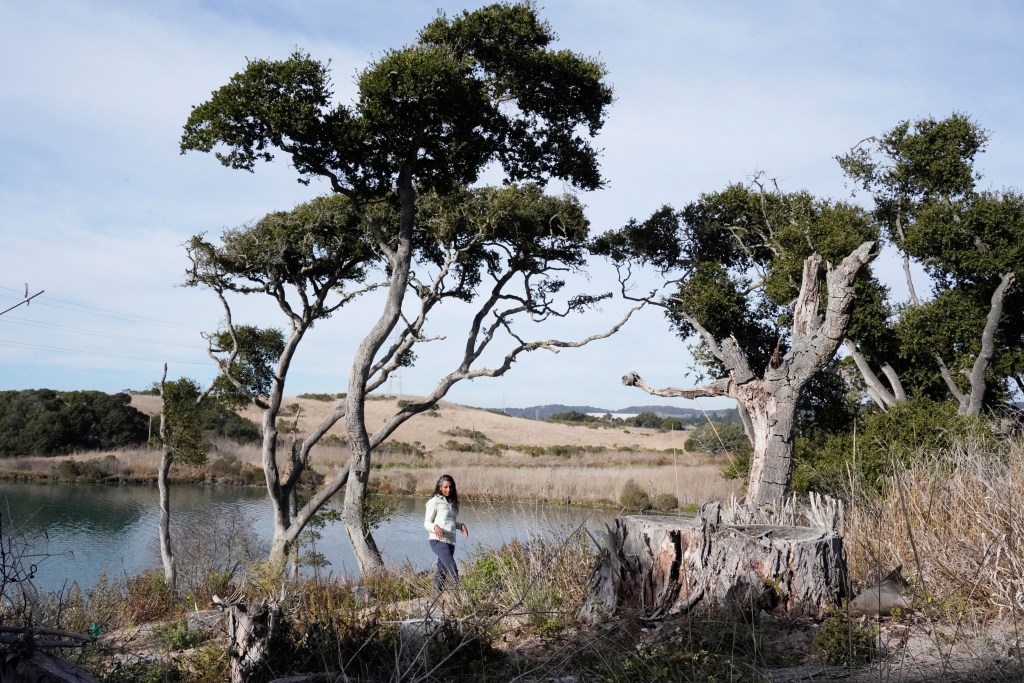
The Elkhorn Slough Reserve is pioneering methods to restore native habitats
Fresh tree stumps the size of dining tables line the road at the Elkhorn Slough Reserve, the remains of hulking eucalyptus trees that blanketed the ground in a thick layer of aromatic wood chips. Nothing grows in the wreckage, but about 40 yards away, a grove of young oak trees flourishes.
Mary Paul, a stewardship associate at the reserve just east of Moss Landing at the heart of the Monterey Bay, revels in the contrast. Where the oaks now stand, staff removed a 13-acre grove of eucalyptus in the 1990s and planted well over 10,000 acorns. In a few decades, the roadside site where eucalyptus trees were cut down this summer should match the restored oak savanna beside it.
Paul hopes the restoration efforts at Elkhorn Slough will help quell public opposition to the removal of the eucalyptus — an invasive tree native to Australia that has become a California icon, and a shelter for migrating birds and Monarch butterflies, but must be removed because they crowd out native species, increase fire risk and guzzle the state’s scarce water.
“It’s not just about clear-cutting all the eucalyptus within the watershed, or even within the reserve — it’s about creating healthy ecosystems and healthy balance,” Paul said. “We are trying to balance everything.”
Returning eucalyptus-choked landscapes to their original glory is a long and arduous process. It involves coaxing the barren earth back to life and dealing with thousands of tons of highly flammable wood.
…
 ALIX SOLIMAN